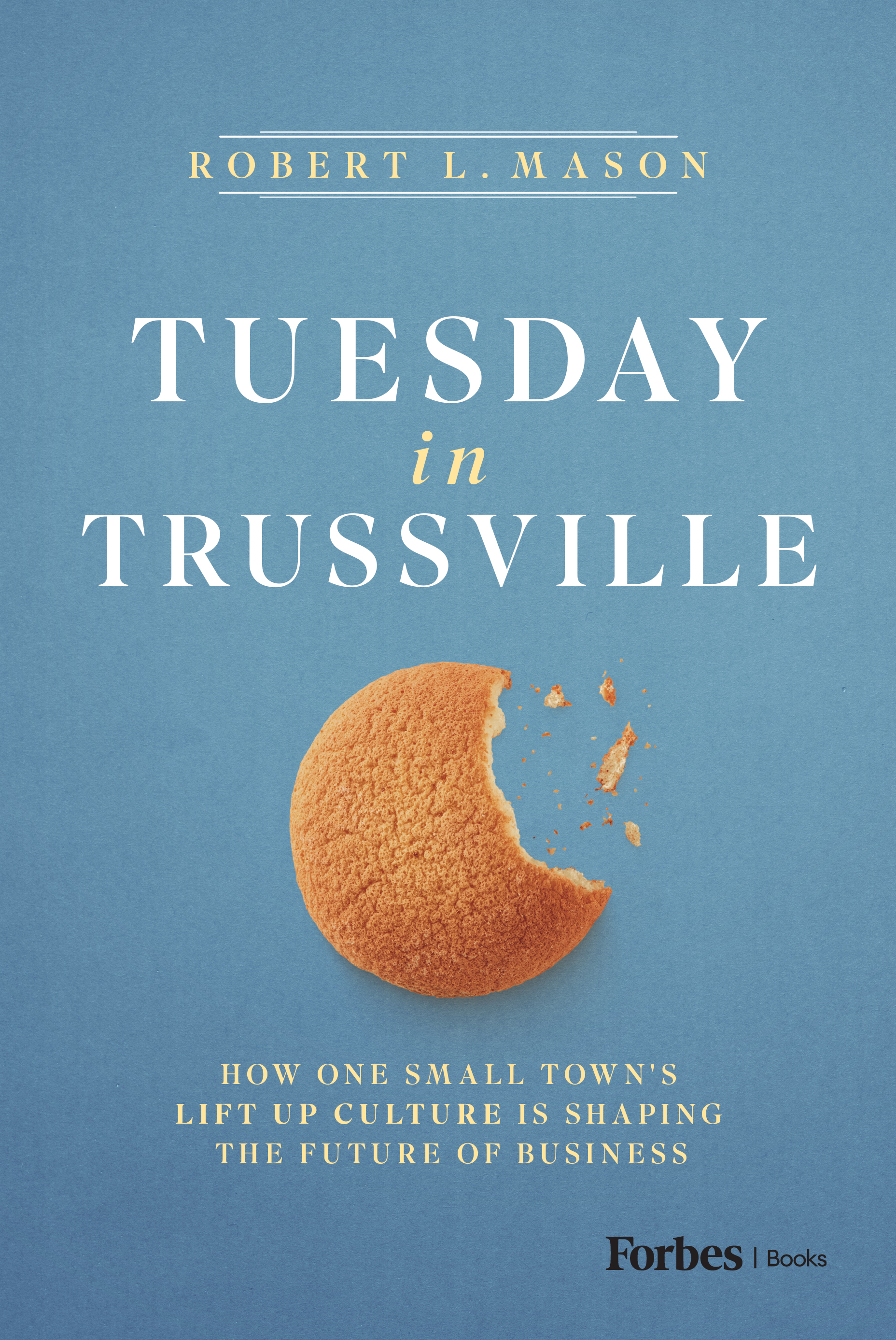
What if the most disruptive business strategy of the century
is not artificial intelligence but love? That's the wager behind Robert L.
Mason's account of SPOC Energy, the hybrid-power company he built in
Trussville, Alabama. The book opens on a Tuesday in Trussville, Alabama, when Mason
gathers the entire SPOC Energy workforce beneath the red steel beams of
Building Eight to announce a company-wide drug test. He watches a veteran
police officer raise a trembling hand and confess he may not pass, revealing
the PTSD and near-suicide that was only stopped by the kindness of the company
chaplain. That unscripted moment becomes the beating heart of Mason’s
memoir-meets-manifesto, a book built around the “Lift Up” culture credited with
turning a small-town automation firm into a three-time Inc. 5000 company that
multinationals now study. Along the way, an executive abandons a $100 million
product line for a canoe where everyone paddles, everyone matters, and dignity
never gets old. Restaurant owners serve dinner to their own servers, and a
stranger prays for Mason’s sick son for two years without ever meeting him.
Each story delivers a single claim: the warehouse floor can become sacred
ground.
Robert L. Mason’s Tuesday in Trussville is a
compelling book packed with the wisdom leaders need to build business culture. It
is a book that redefines culture and service, and presents what the author
calls “felt consequence”—wisdom earned by surviving one’s own decisions. That
is exactly what qualifies a leader more than any credential. This book presents
a new face of mercy, which, when wielded wisely, outperforms zero tolerance.
Mason backs the sentiment with research from Forbes, Harvard, and Deloitte on
trust, respect, and recognition, cleverly discussing the engines of innovation.
I loved his take on DEI as “diversity of competence.” The prose moves like
testimony, and the book offers stories with cinematic scenes, aphorisms built
to be underlined, a Southern cadence that pivots from forklift noise to prayer
in a single sentence. Each chapter closes with a “Rewind” (one question, one
reflection, one learning), plus oaths leaders can actually recite. This is a
precious gem for founders, managers, and executives weary of perk-driven
retention and seeking a workable blueprint. This is a book you don’t just read;
you study it, then take the lessons with you.



 Mommys_Boy_6x9.jpg)



.jpg)
















.jpg)
.jpg)



.jpg)


.jpg)
.jpg)



.jpg)


 (2).jpg)


.jpg)





.jpg)




.jpg)



.jpg)















.jpeg)






.png)


 (1).jpg)


.jpg)




.jpg)