The 10 Most Effective Marketing Tools for Authors in 2027
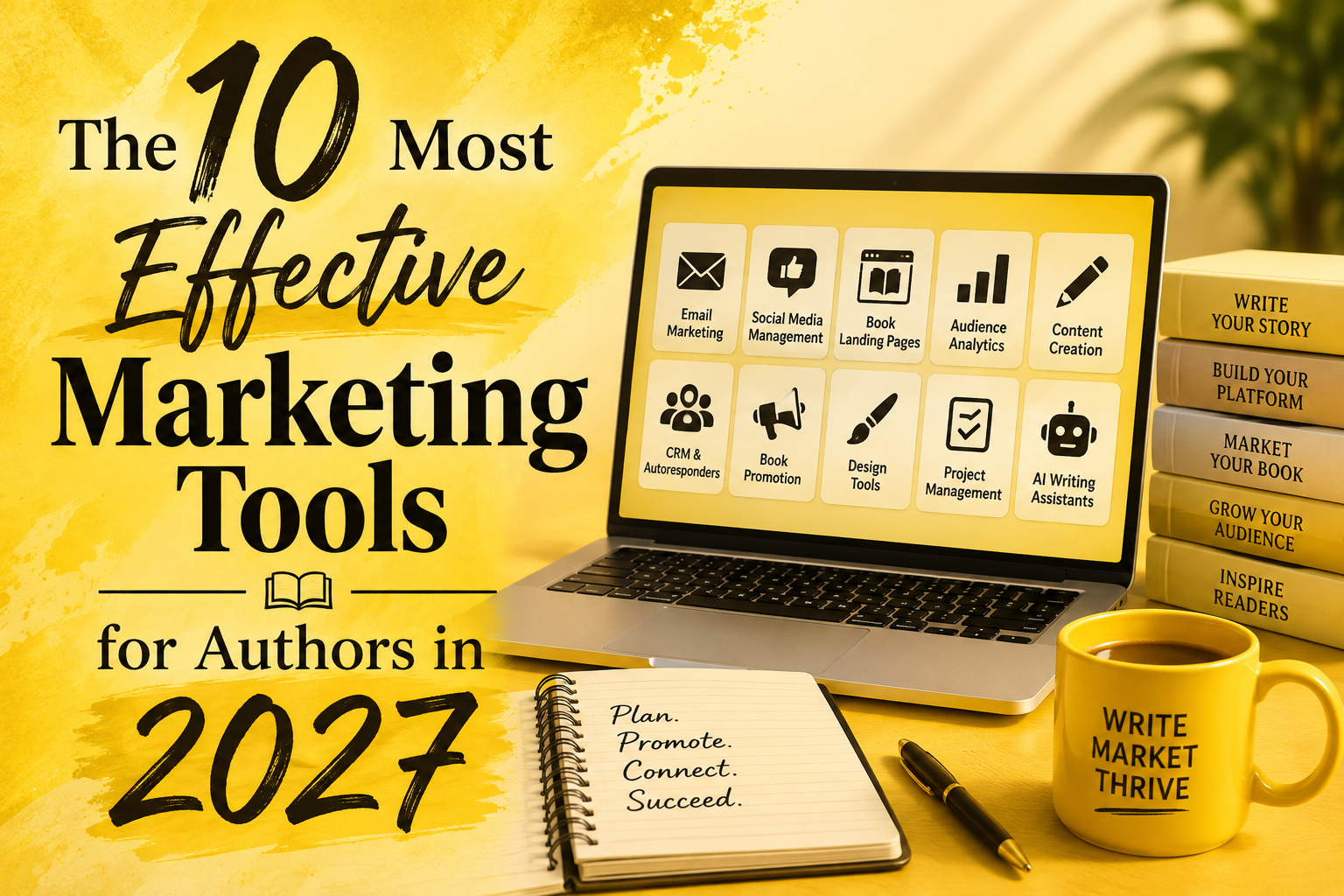
This guide ranks the ten most effective marketing tools available to authors in 2027—from review services and award programs to advertising platforms and owned-audience engines—and shows you how to stack them into a single, self-reinforcing system.
More books are now published every single day than a dedicated reader could finish in several lifetimes. In 2027, the flood of AI-assisted publishing has made one truth impossible to ignore: visibility is the real currency of the book business—and trust is how you earn it.
That's why the savviest indie and hybrid authors still build their marketing on three pillars: getting editorial reviews from professional critics, accumulating genuine reader book reviews on retail platforms, and earning seals from respected book award contests. Algorithms change, social platforms rise and fall, but third-party validation remains the fastest way to convert a browser into a buyer.
This guide ranks the ten most effective marketing tools available to authors in 2027—from review services and award programs to advertising platforms and owned-audience engines—and shows you how to stack them into a single, self-reinforcing system.

1. Getting Editorial Reviews That Actually Sell Books
Before readers trust you, they trust what others say about you. Editorial reviews—in-depth critiques written by professional reviewers rather than customers—are the foundation of every credible book launch. They appear in the "Editorial Reviews" section of your Amazon page (via Author Central), on your back cover, in your press kit, in bookstore pitches, and in every ad you'll ever run.
The Book Commentary has become a go-to editorial review service for indie authors because it combines professional rigor with genuine affordability. Experienced critics write reviews that engage with the book—its prose, structure, characters, and themes—producing the kind of quotable, nuanced commentary blurbs are made of. Standout titles earn recommended distinctions, and reviews are published on a permanent, shareable page you can link from your website, social bios, and media outreach.
Pro tip: Don't just collect the review—mine it. Pull one punchy sentence for your cover, one paragraph for Amazon, and one phrase for your award entry and ad copy. A single strong editorial review can fuel a dozen marketing assets.
2. Reader's Favorite: The Book Award Contest That Pays for Itself
Ask any bookseller what stops a customer's eye on a crowded shelf, and the answer is the same: an award seal. In 2027, when buyers are increasingly skeptical of unvetted titles, book award contests remain one of the highest-ROI credibility investments an author can make—and the Reader's Favorite Book Award Contest leads the pack.
Reader's Favorite is one of the largest and most established international award programs for independent and small-press authors, with well over a hundred genre categories—so your niche historical fantasy or cozy mystery competes against its actual peers, not against celebrity memoirs. Every entry receives a free professional review (a valuable asset in itself), entries are judged by industry professionals including editors, librarians, and reviewers, and winners receive digital and physical seals, certificates, and an invitation to a formal awards ceremony.
The marketing leverage is enormous: the phrase "award-winning author" transforms your bio, Amazon page, press releases, and ad headlines overnight. Finalists and five-star recipients can—and should—use the recognition too. Round out your strategy with one or two additional respected contests such as the NIEA, IPPY, or IBPA Ben Franklin Awards.
Pro tip: Enter early in your launch window. Winning after launch gives you a second news cycle; winning before gives you a stronger debut.
3. NetGalley: Book Reviews Before Launch Day
Nothing kills a book's momentum like a "Be the first to review this item" message. Retail algorithms reward early review velocity, so advance reader copy (ARC) distribution is essential.
NetGalley remains the industry standard for putting your book in front of professional readers—librarians, booksellers, journalists, and prolific reviewers—months before publication. A well-run NetGalley campaign can seed dozens of reviews that post to Amazon and Goodreads the moment your book goes live. The direct cost is significant, but many author co-ops and publishers offer shared slots at a fraction of the price.
On a tighter budget? BookSirens and Booksprout deliver targeted ARC teams for a modest fee and let you vet readers by genre and review history. Whatever platform you choose, aim for a 30–60 day ARC window and a launch-week target of 20–50 reviews—the threshold where paid advertising starts converting efficiently.
4. BookBub: Featured Deals and Precision Advertising
A decade in, BookBub is still the single most powerful promotional platform in publishing. Its audience isn't casual—it's tens of millions of self-identified, genre-sorted book buyers.
Two tools matter. First, the Featured Deal: a discounted-price promotion emailed to BookBub's subscriber lists. A single deal can sell thousands of copies in 48 hours, spike your Amazon rank, trigger also-bought algorithms, and (for series authors) generate weeks of profitable read-through. Acceptance is competitive—strong covers, solid review counts, and professional editorial reviews all help—so apply repeatedly and price strategically. Supporting promo sites like Freebooksy, Bargain Booksy, and Robin Reads make excellent stack partners.
Second, BookBub Ads: self-serve display ads that let you target readers by the exact authors they follow. For reaching fans of comparable authors with surgical precision, nothing else comes close at this cost.
5. Your Email List: Beehiiv or MailerLite + BookFunnel/StoryOrigin
Every tool on this list rents you an audience. Email is the one you own. Ad costs rise, algorithms throttle reach, platforms vanish—but a list of readers who asked to hear from you is an asset that compounds with every book you publish.
In 2027, Beehiiv and MailerLite lead for authors: clean automation, landing pages, and segmentation without enterprise pricing. Pair your platform with a reader magnet—a free prequel, bonus chapter, or exclusive short story—delivered through BookFunnel or StoryOrigin. Both handle frictionless ebook delivery to any device, and both power the two highest-leverage list-building tactics in indie publishing: newsletter swaps (cross-promoting with authors in your genre) and group promotions.
Email consistently outperforms social media on conversion by a wide margin. A modest list of 2,000 engaged genre readers will outsell 50,000 passive social followers—every launch, every time.
6. Amazon Ads: Intent-Based Book Advertising
Most advertising interrupts people. Amazon Ads meet people who are already searching for a book like yours—the purest intent in book marketing.
Start with an automatic Sponsored Products campaign to let Amazon's algorithm discover which search terms and product pages convert for your book. Harvest the winners into manual campaigns: exact-match keywords ("gritty historical fantasy"), comp-title targeting (sponsored placement on similar books' pages), and category targeting. For Kindle Unlimited authors, factor KENP page reads into your ROI math—a "break-even" ad often becomes profitable once reads are counted.
Once you've identified converting audiences, Meta (Facebook/Instagram) Ads can scale beyond Amazon's ecosystem—particularly for wide-distribution and direct-sales authors. But master Amazon first; it's where the buyers are.
7. Publisher Rocket: Amazon SEO and Category Intelligence
Most authors guess their categories and keywords. Publisher Rocket users know theirs. This inexpensive one-time-purchase software reverse-engineers Amazon's marketplace: which search terms readers actually type, how much competition each keyword carries, which categories are winnable, and what your most successful competitors are ranking for.
Three use cases deliver outsized returns. First, category selection: placing your book in less crowded, more relevant categories dramatically improves your odds of orange bestseller flags—which are themselves powerful social proof. Second, keyword optimization: build your subtitle, series description, and seven backend keyword slots from data, not intuition. Third, ad targeting: Rocket exports hundreds of validated author and title targets for Amazon Ads in minutes—work that would otherwise take days.
For the price of a couple of paperbacks, it's the highest-leverage research tool in the business.
8. Short-Form Video: BookTok, Reels, and the CapCut/Canva Stack
The most powerful organic discovery engine in publishing still runs on 15- to 60-second videos. BookTok (TikTok), Instagram Reels, and YouTube Shorts continue to mint bestsellers from backlist titles with zero ad spend—and the barrier to entry has never been lower.
The 2027 toolkit is simple: CapCut for editing (auto-captions, trending templates, and AI-assisted cuts have made polished video a 20-minute task) and Canva for animated cover reveals, quote cards, and consistent branding. The strategy that works is hook-first storytelling: lead with your book's most dramatic premise or most devastating line in the opening second, and let curiosity do the rest. Consistency beats virality—three posts a week for six months outperforms one viral lottery ticket.
Cross-post everything to YouTube Shorts, where videos are searchable and keep generating discovery for years—an evergreen asset TikTok can't match.
9. Goodreads: Giveaways, Shelf Adds, and Reader Communities
Goodreads is owned by Amazon, and its data quietly feeds retail recommendation engines—making it far more strategically important than its dated interface suggests.
Three tactics matter. Kindle Giveaways put your book in front of thousands of genre readers; entrants who add it to their Want to Read shelves signal demand to Amazon's algorithm and receive notification nudges on release. Shelf adds from organic browsing compound the effect. And community participation—genuine presence in genre groups, not drive-by promotion—builds the early review corps every launch needs.
Practical housekeeping: claim your Author Program profile, and if your metadata (cover, blurb, series order) is wrong, use the librarian system to fix it—clean data directly affects discoverability. Also keep an eye on The StoryGraph, whose mood-based recommendations and engaged reader base have made it a meaningful second home for genre fiction communities.
10. Podcast Guesting and Virtual Book Tours
Every podcast interview you record is a permanent, searchable, backlink-generating asset. Show notes link to your website (strengthening the SEO authority that helps all your pages rank), episodes surface in search for years, and audio reaches readers during commutes and workouts—hours when they can't scroll social media.
In 2027, matching tools like Podmatch and MatchMaker.fm make it easy to find relevant shows. The key is targeting niche podcasts—history shows for historical fiction, craft shows for writing-adjacent nonfiction—where a small but perfectly aligned audience converts far better than a large generic one. Tie your pitch to something newsworthy (an award win, a starred editorial review, a timely theme) and bookings multiply.
Repurpose every appearance: audio clips for Reels, quote graphics for social, transcripts for blog content. One interview becomes a week of material.
How to Stack These Tools Into One Marketing Engine
Individually, each tool is useful. Sequenced, they're transformative:
- Credibility layer (Tools 1–2): Secure editorial reviews from The Book Commentary and enter the Reader's Favorite Book Award before launch.
- Social proof layer (Tools 3, 9): Run ARC campaigns and a Goodreads giveaway so launch day opens with reviews and shelf adds.
- Traffic layer (Tools 4, 6, 7): Fuel the proven book with BookBub promos and data-driven Amazon Ads.
- Retention layer (Tool 5): Capture every new reader on your email list—this is where careers are built.
- Reach layer (Tools 8, 10): Sustain momentum between launches with video and podcast visibility.
Each layer makes the next one cheaper and more effective. Reviews make ads convert; ads feed your list; your list guarantees reviews for your next launch.
Frequently Asked Questions
What is the best way of getting editorial reviews for my book? Start with a reputable professional review service like The Book Commentary, which provides in-depth, quotable reviews from experienced critics. Submit 4–8 weeks before launch so you can add excerpts to your cover, Amazon Editorial Reviews section, press kit, and award entries before publication.
Are book award contests worth it for indie authors? Yes—provided you choose established programs. The Reader's Favorite Book Award Contest, for example, includes a free professional review with entry, over a hundred genre categories, and winner seals that demonstrably improve conversion on covers and retail pages. Even finalist status is usable marketing.
How many book reviews do I need before running paid ads? Aim for at least 15–20 retail reviews. Below that threshold, click-through and conversion rates rarely justify ad spend. An organized ARC team (via NetGalley, BookSirens, or StoryOrigin) is the most reliable way to hit the number by launch week.
Which single tool gives the fastest ROI? A BookBub Featured Deal delivers the largest one-day spike, but the most cost-efficient starting point is a strong editorial review plus a growing email list—both low-cost assets that make every later tactic more profitable.
Do these tools work for nonfiction authors? Absolutely. Editorial reviews and award contests are arguably even more valuable for nonfiction, where credibility drives bulk sales, speaking invitations, and media coverage.
The Bottom Line
The authors who thrive in 2027 aren't the ones chasing every shiny new platform—they're the ones building on trust. Editorial reviews from services like The Book Commentary establish professional credibility. Genuine reader book reviews power retail algorithms and ad performance. And respected book award contests like the Reader's Favorite Book Award give you third-party validation that no amount of self-promotion can buy.
Pick three tools from this list. Master them for ninety days. Then add the next. Consistency with a few proven instruments will always outperform scattered effort across many—and your next reader is already out there, waiting for a reason to trust you.