The Ultimate Guide to Getting Your Book Reviewed: From Editorial Praise to Reader Raves
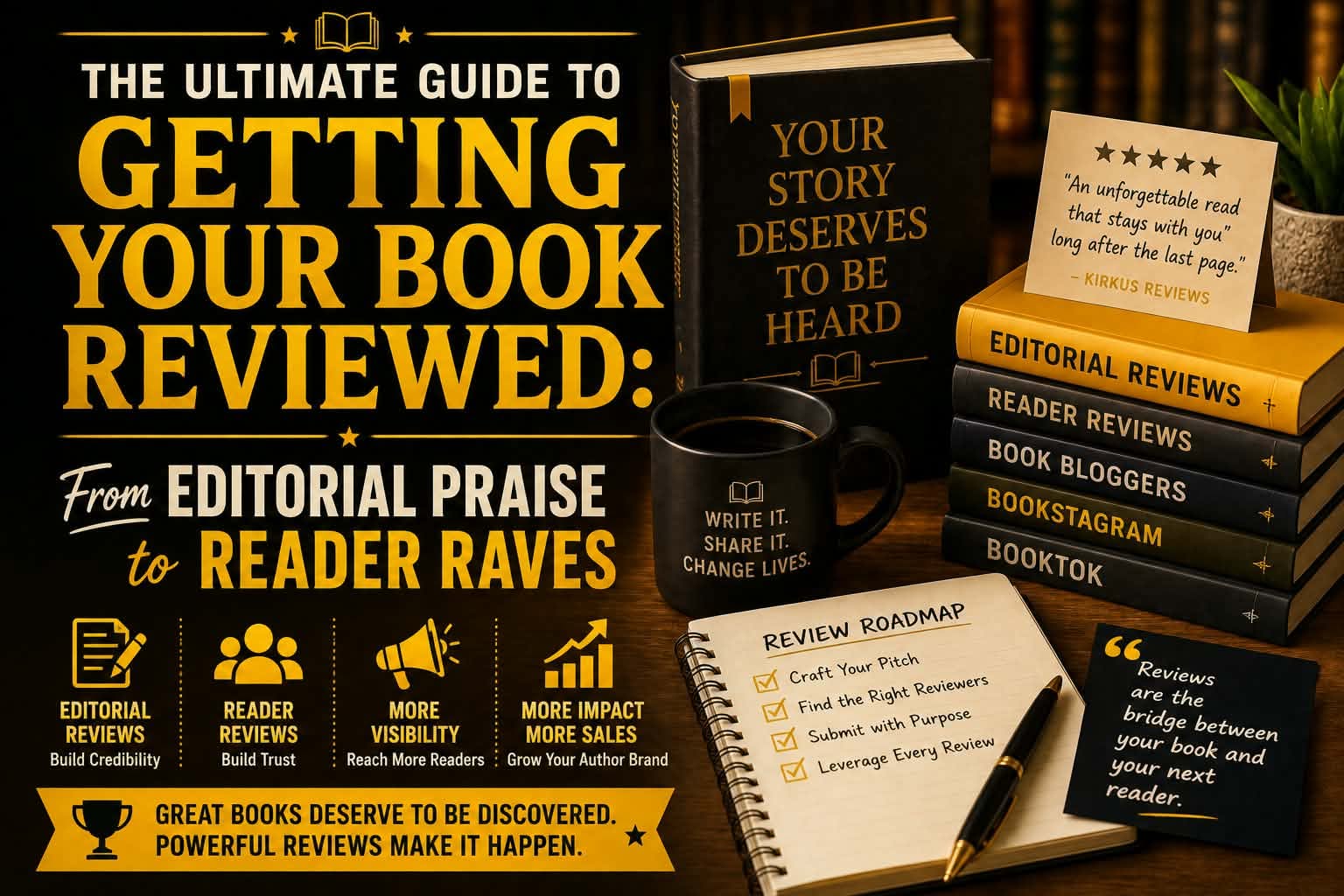
Discover how to get your book reviewed with our ultimate guide. Learn how to secure editorial book reviews, navigate paid book reviews, and leverage book reviews for authors to boost sales!
Congratulations! You did it. You sat in front of a blank screen, fought off writer’s block, wrestled your plot holes into submission, and wrote an actual, finished book. That in itself is a massive accomplishment that puts you ahead of millions of aspiring writers.
But as almost every published writer quickly realizes, finishing the manuscript is only half the battle. The second half? Getting people to read, love, and talk about it.
If you’ve ever launched a book into the wild only to be met by crickets, you aren't alone. In today’s crowded publishing landscape, where thousands of new titles hit online stores every single day, getting noticed can feel like trying to whisper in a roaring stadium. That’s where reviews come in.
Reviews are the lifeblood of book sales. They provide social proof, feed online recommendation algorithms, reassure hesitant buyers, and give your work the legitimacy it deserves. But how do you go from zero reviews to a steady stream of glowing feedback?
Whether you’re self-published, traditionally published, or somewhere in between, this comprehensive guide will walk you through everything you need to know about getting book reviews for authors. We’ll cover how to pitch bloggers, tap into editorial book reviews, navigate the tricky waters of paid book reviews, and build a loyal launch team that champions your work.
Understanding the Review Ecosystem: What Types of Reviews Do You Need?
Before you start firing off emails to every reviewer on the internet, it’s crucial to understand that not all book reviews serve the same purpose. To build a successful book marketing strategy, you need to understand the distinct roles different reviews play.
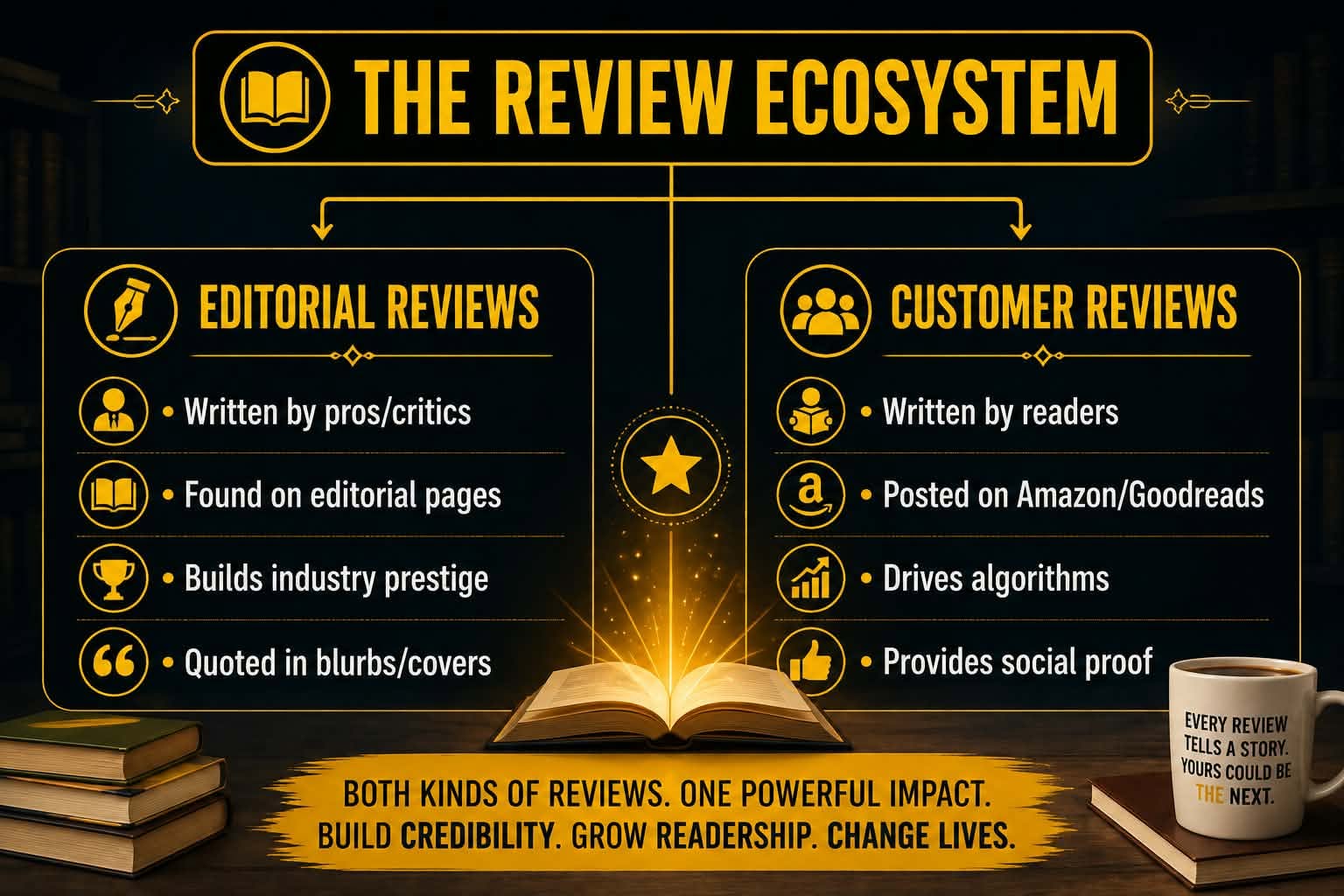
1. Customer Reviews (Organic Reader Reviews)
These are the star ratings and write-ups left by everyday readers on platforms like Amazon, Goodreads, Barnes & Noble, and Kobo. They tell prospective buyers, "People like me read this and loved it!" Customer reviews are vital for triggering retailer algorithms that recommend your book to new audiences.
2. Editorial Book Reviews
Editorial book reviews come from professional critics, industry publications, trade magazines (like Kirkus Reviews, Publishers Weekly, or Booklist), and recognized literary blogs. Unlike customer reviews, these are formal critiques written by experts. You can showcase them right on your book cover, inside your front matter, on your website, and in the dedicated "Editorial Reviews" section on your Amazon sales page.
3. Paid Book Reviews
Paid book reviews are professional editorial reviews that you pay a company or publication to write. They are widely used by indie authors to gain professional editorial critiques without waiting months for traditional trade reviewers. (Don't worry—we’ll talk about how to use these ethically and without getting into trouble with Amazon’s guidelines later in this guide!).
To build maximum credibility and sales momentum, your goal should be a healthy mix: professional editorial book reviews to establish prestige, and a steady flow of reader reviews to build social proof.
Part 1: How to Secure Professional Editorial Book Reviews
Let's start with the heavy hitters: editorial book reviews.
When a prospective reader lands on your book's sales page, a quote from a reputable review outlet acts like a glowing seal of approval. It says, "This book meets professional quality standards."
Traditional Trade Publications vs. Indie-Friendly Outlets
Traditionally, trade magazines like Publishers Weekly, Kirkus Reviews, Library Journal, and Booklist were reserved exclusively for big traditional publishing houses. Today, the landscape is much more inclusive.
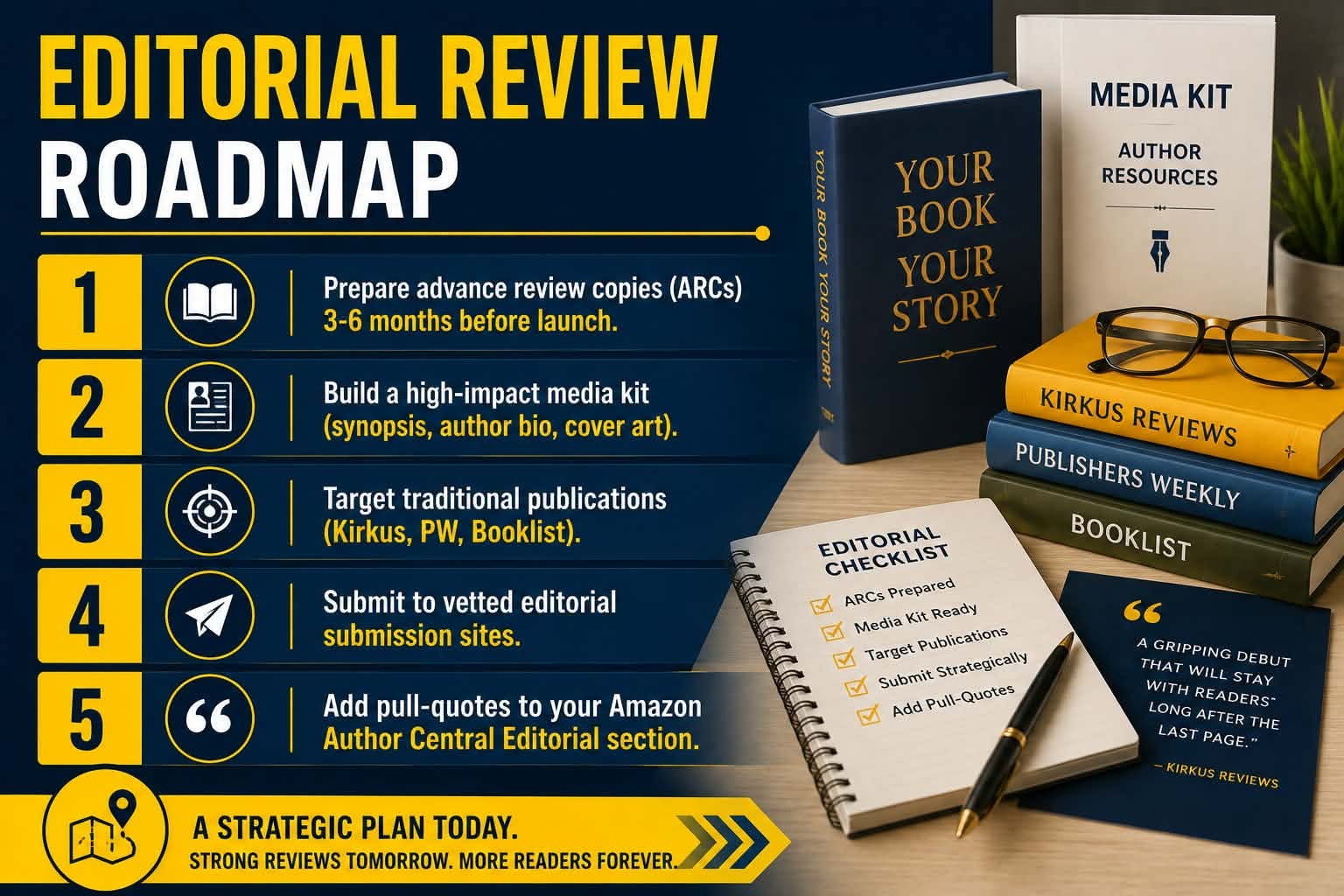
- For Traditionally Published Authors: Your publisher’s publicity team will usually handle sending Advance Reader Copies (ARCs) to trade magazines 3 to 6 months before your release date.
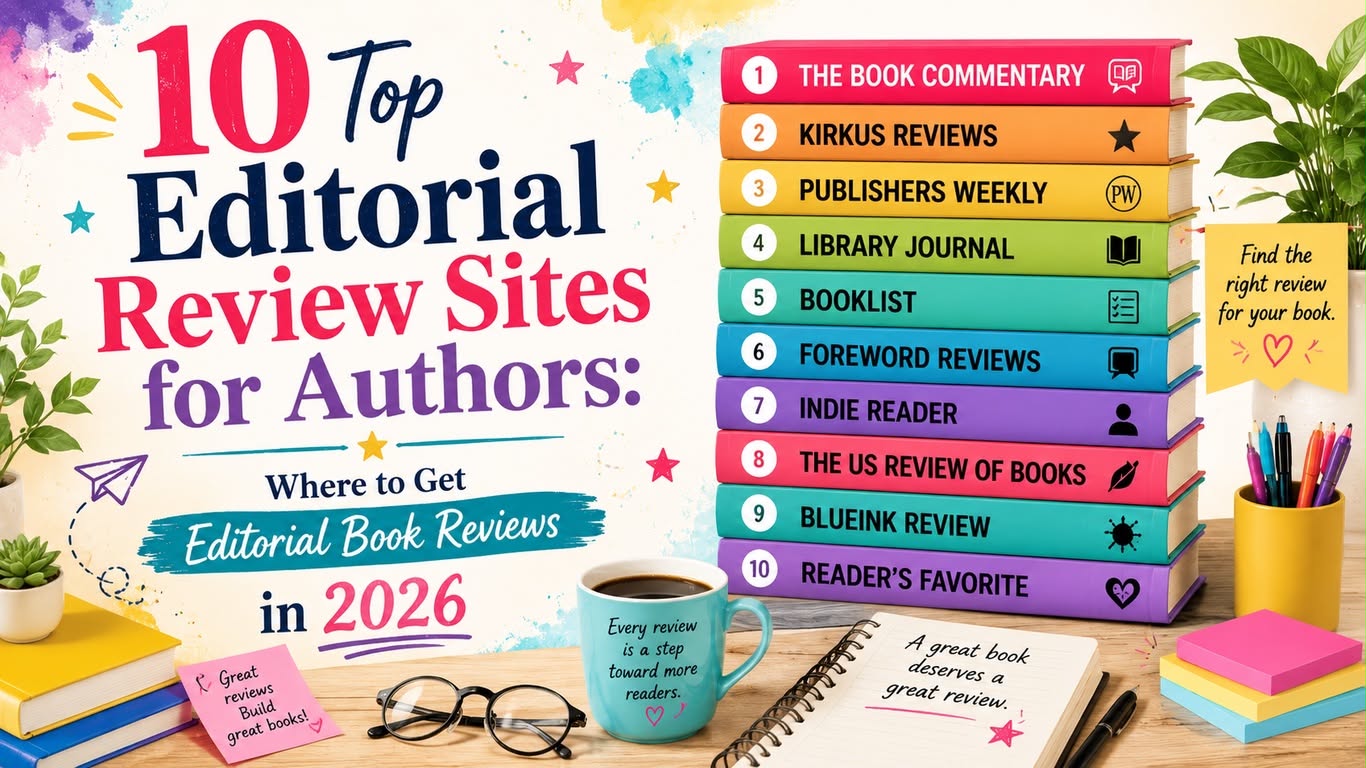
- For Indie/Self-Published Authors: Many traditional trade reviewers have created dedicated branches for independent authors (such as Kirkus Indie or PW Select). Additionally, indie-focused outlets like BlueInk Review, The Book Commentary, Foreword Clarion, and Readers' Favorite cater specifically to self-published writers.
How to Pitch for Editorial Reviews
Getting an editorial review requires preparation and polish. Here is how to set yourself up for success:
- Start Early (3 to 6 Months Out): Major editorial publications review books before they go to the print. If your book is already live, many traditional trade outlets will no longer consider it for free editorial placement.
- Prepare a Professional Media Kit: Include a high-resolution cover image, a polished author photo, a compelling book synopsis, publication details (ISBN, page count, publication date, genre), and a short author bio.
- Format Your ARC Flawlessly: Ensure your manuscript is professionally edited and formatted. Sending an unpolished advance copy with typos will lead to a poor review—or no review at all.
Navigating Paid Book Reviews Responsibly and Ethically
Mention the phrase paid book reviews in an author forum, and you might see people react with caution. And for good reason! There is a lot of confusion around what is allowed, what is banned, and what actually helps your book.
Let’s clear up the myths so you can navigate paid reviews safely and effectively.
The Big Golden Rule: Never Buy Amazon Customer Reviews
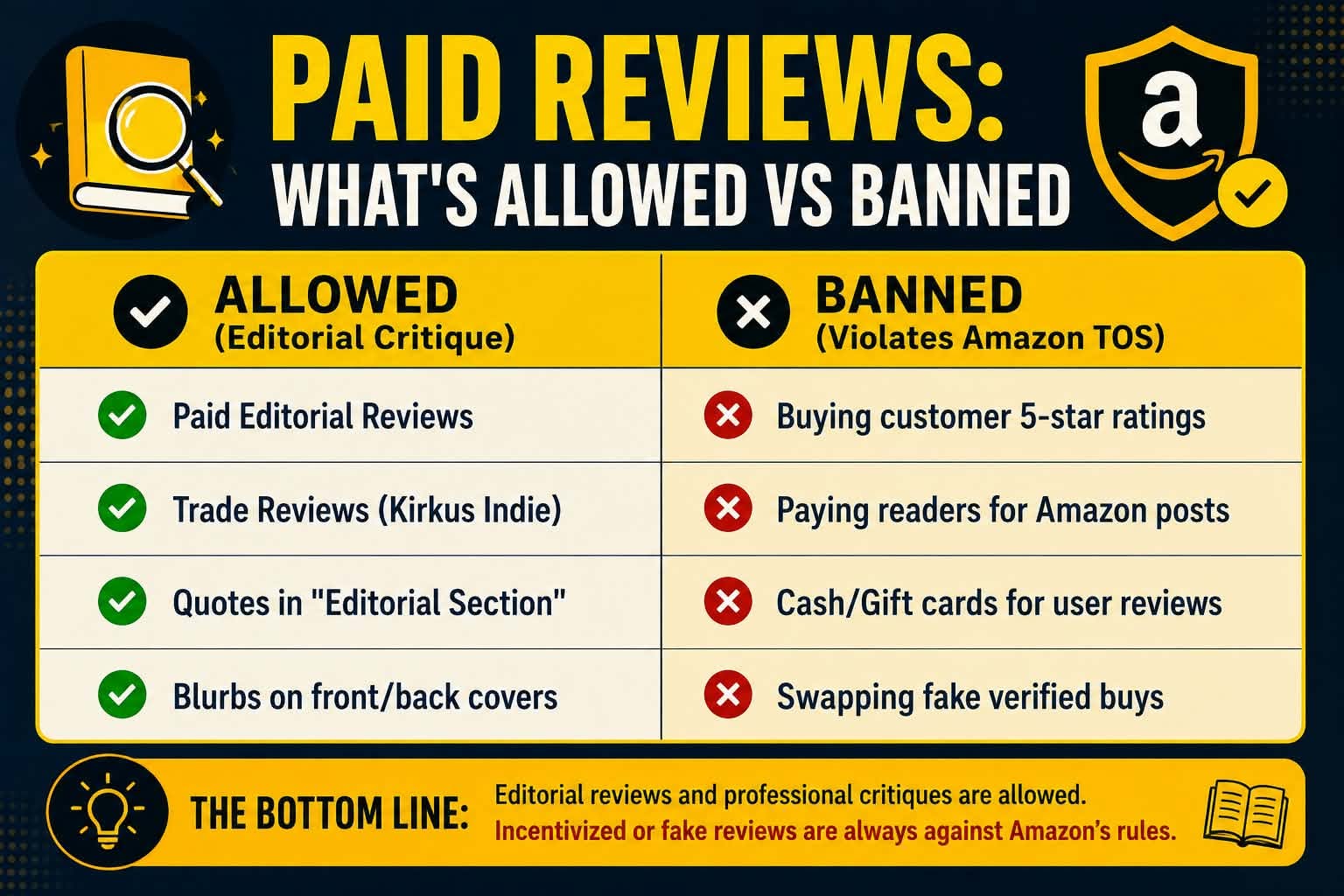
First, let’s make a critical distinction: buying customer reviews on retail sites like Amazon is strictly forbidden.
Amazon’s Terms of Service strictly prohibit paying anyone to write a customer review, giving gift cards in exchange for five-star customer reviews, or using services that promise "verified purchase 5-star reviews." Doing this can get your Amazon author account suspended and your book permanently removed from the store.
So, When ARE Paid Book Reviews Allowed?
Paid editorial book reviews are 100% legal, ethical, and industry-standard—provided they follow these two criteria:
- They are written by professional reviewers/critics as an editorial critique.
- They are placed in the Editorial Reviews section of your Amazon book page (or on your cover/website), NOT posted as customer reviews under a personal user profile.
Reputable Paid Editorial Review Services
If you have a marketing budget and want high-quality, professional feedback to boost your book’s authority, consider these respected paid editorial review services:
- Kirkus Indie: One of the most prestigious names in book reviewing. A Kirkus Indie review gives you a complete, unbiased critique from an industry professional. If it's a stellar review, you can use pull-quotes everywhere; if it's not, you have the option to keep it private.
- BlueInk Review: Founded by a former book review editor at Chicago Tribune and a literary agent, BlueInk focuses exclusively on reviewing self-published titles with strict journalistic integrity.
- The Book Commentary: Offers low-cost reviews and only publishes reviews that are rated 4-5 stars.
- Clarion Reviews (Foreword Reviews): The paid review branch of Foreword Magazine, specializing in indie and small-press titles. Their detailed, multi-paragraph reviews carry significant weight with booksellers and librarians.
- City Book Review (San Francisco / Manhattan Book Review): Offers comprehensive review packages for indie authors across every genre.
- Readers' Favorite: Offers both free editorial review opportunities and expedited paid editorial review options, complete with award contest entries.
How to Maximize a Paid Review
When you receive a paid editorial review, don't just leave it sitting in an email inbox! Extract the punchiest 1–2 sentence quotes (the "blurbs") and put them to work:
- Add them to the top of your Amazon book description under "Editorial Reviews."
- Print them on your book's front and back cover.
- Use them as text overlays on eye-catching graphic posts for social media.
- Feature them at the very top of your author website and sales landing pages.
Part 3: Gathering Authentic Reader Reviews (Book Reviews for Authors)
While editorial praise builds prestige, high-volume reader reviews drive sales. When an everyday browser sees a book with hundreds of 4.5-star ratings, their purchasing resistance drops dramatically.
Here is how to build a systematic engine for collecting authentic customer book reviews for authors.
1. Build an Advanced Review Copy (ARC) Team
An ARC team (or launch team) is a group of dedicated readers who agree to receive a free digital copy of your book before it officially launches, in exchange for an honest review on or around release day.
Where to Find ARC Readers:
- Your Existing Email List: Your subscribers are already your biggest fans! Send an email asking, "Would you like early access to my upcoming book in exchange for an honest review?"
- Social Media Followers: Post behind-the-scenes updates on Instagram, TikTok, or Facebook and invite engaged followers to apply for your ARC team via a simple Google Form.
- ARC Services & Marketplaces: If you don't have an established audience yet, specialized platforms connect authors directly with eager reviewers. NetGalley is the gold standard for reaching booksellers, librarians, and top reviewers. Others include StoryOrigin & BookSprout, which are outstanding, affordable tools designed specifically for indie authors to manage ARC distribution, track who posts reviews, and prevent ARC leakages. You can also use Voracious Readers Only, most suitable for building an initial reader base by offering free digital copies in exchange for honest feedback.
2. Include a Friendly Call-to-Action (CTA) in Your Book's Back Matter
One of the most overlooked spots for getting reviews is the very end of your book!
When a reader finishes your last page, they are at the peak of their emotional connection with your story. Capitalize on that moment by adding a personal, warm note in your book's back matter:
Example Back-Matter Note:
Dear Reader,
Thank you so much for spending time in my world! As an independent author, word-of-mouth is the absolute single best way for new readers to discover my work. If you enjoyed this book, would you take two minutes to leave an honest review on Amazon or Goodreads? Your support means the world to me and helps keep this story alive!
With gratitude,
[Your Name]
Include a direct short-link or QR code leading right to your book’s Amazon review page so readers don't have to search for it manually.
Part 4: Outreach Strategy – Pitching Book Bloggers, Bookstagrammers, and BookTokers
Social media has transformed how books are discovered. Bookstagram (Instagram’s book community) and BookTok (TikTok’s book community) can propel a title onto bestseller lists overnight. Securing reviews from niche influencers in your genre is one of the most effective ways to boost sales.
Step 1: Research and Qualify Reviewers
Don't blast the same generic email to 500 bloggers. Highly targeted outreach yields far better results than mass cold emailing.
- Search tags like #Bookstagram, #BookTok, #RomanceBookBlogger, or #SciFiReviewer to find reviewers who actively read your specific sub-genre.
- Check their bio or website for a Review Policy. Respect their rules! If a reviewer says, "My requests are currently closed" or "I do not read urban fantasy," move on. Respecting their boundaries saves everyone time.
Step 2: Craft the Perfect Email Pitch
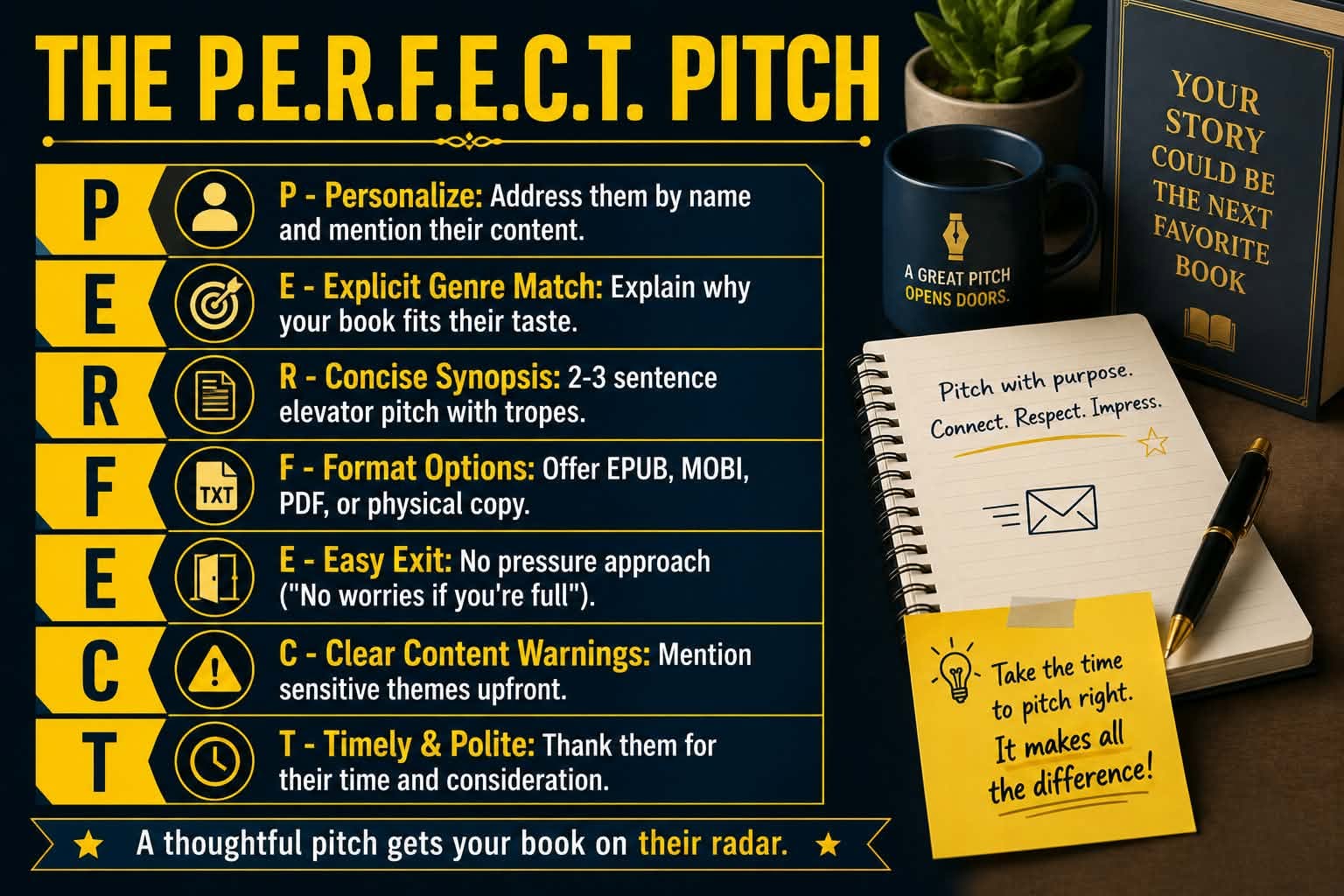
Influencer reviewers receive dozens of pitch emails a week. Keep your email concise, polite, and personalized.
Template: Email Pitch to Book Bloggers & Social Reviewers
Subject: Review Request: [BOOK TITLE] – A [Genre] with [Keyword 1] and [Keyword 2]
Hi [Reviewer Name],
I’ve been following your posts on [Instagram/TikTok/Blog] and loved your recent review of [Book Title They Reviewed]. Since you enjoy [specific trope/genre], I thought my upcoming novel might be right up your alley!
Title: [Book Title]
Genre: [Genre / Sub-genre]
Target Audience: Fans of [Famous Author A] and [Famous Author B]
Release Date: [Date]
Quick Pitch:
[2–3 sentence high-concept elevator pitch. Highlight tropes, stakes, and main hook.]
Content Warnings: [List any content warnings, e.g., violence, explicit romance, etc., or state None]
I would be thrilled to send you a complimentary digital copy (EPUB, MOBI, or PDF) [or paperback if budget permits] in exchange for an honest review on your platform and Amazon/Goodreads.
No worries at all if your review list is full right now! If you're interested, just reply to this email with your preferred format, and I’ll send it right over.
Thanks so much for your time and for supporting authors!
Best regards,
[Your Name]
[Link to Author Website / Social Handles]
Part 5: Post-Review Strategy – How to Turn Every Review Into Marketing Gold
Getting the review is only half the fun—the real power lies in how you leverage it across your broader marketing strategy.
1. Update Amazon Author Central
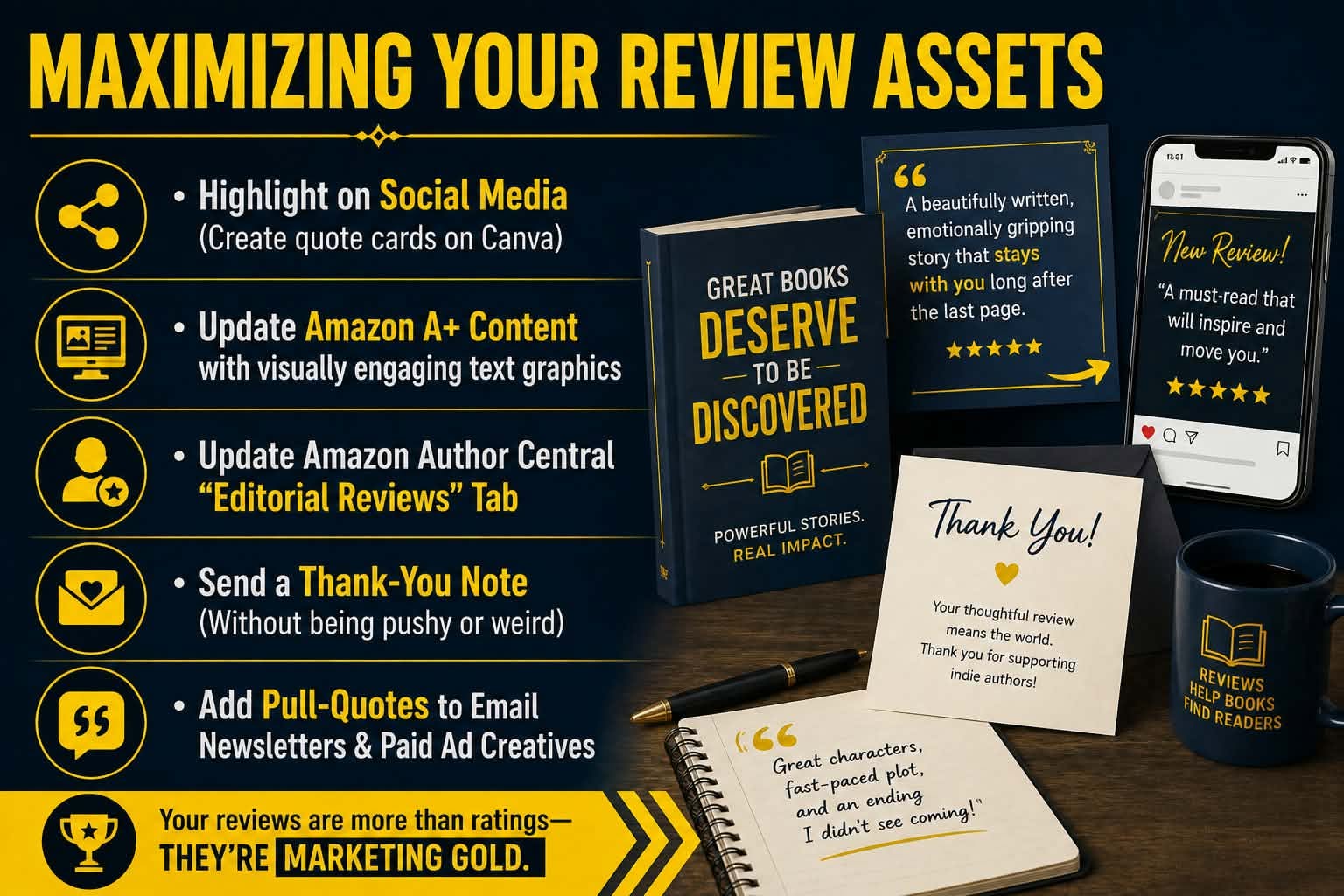
Log into your Amazon Author Central account, navigate to your books, and open the "Editorial Reviews" tab. Paste key pull-quotes from your paid book reviews or traditional editorial book reviews here. Formatting them cleanly with bold text for key praise will draw the eyes of prospective buyers.
2. Create Eye-Catching Social Media Graphics
Use free graphics tools like Canva to turn great quotes into visually appealing social media posts:
- Pick a high-impact 5- to 10-word quote (e.g., "An absolute roller-coaster ride of a thriller!" — Editorial Review).
- Place it over a background featuring your book cover.
- Share it on Instagram, Pinterest, Facebook, and Twitter, tagging the reviewer if applicable.
3. Incorporate Quotes into Amazon A+ Content
Amazon allows authors to add visual "A+ Content" to their product pages. Designing custom banners that highlight glowing editorial blurbs alongside high-resolution mockups of your book can dramatically increase conversion rates.
4. What to Do with Critical or Negative Reviews?
Here is a gold nugget of author wisdom: Never, ever argue with a reviewer.
Not every review will be a 5-star rave—and that’s okay! In fact, a book with only glowing 5-star reviews can sometimes look suspicious to savvy buyers. A few 3-star or 4-star critiques add authenticity.
- Rule #1: Never respond angrily to a negative customer review.
- Rule #2: Do not attempt to contact a reviewer to ask them to change or delete a low rating.
- Rule #3: Remember that customer reviews are for readers, not for authors. Focus your energy on finding the readers who do love your genre and style!
Summary Checklist for Authors
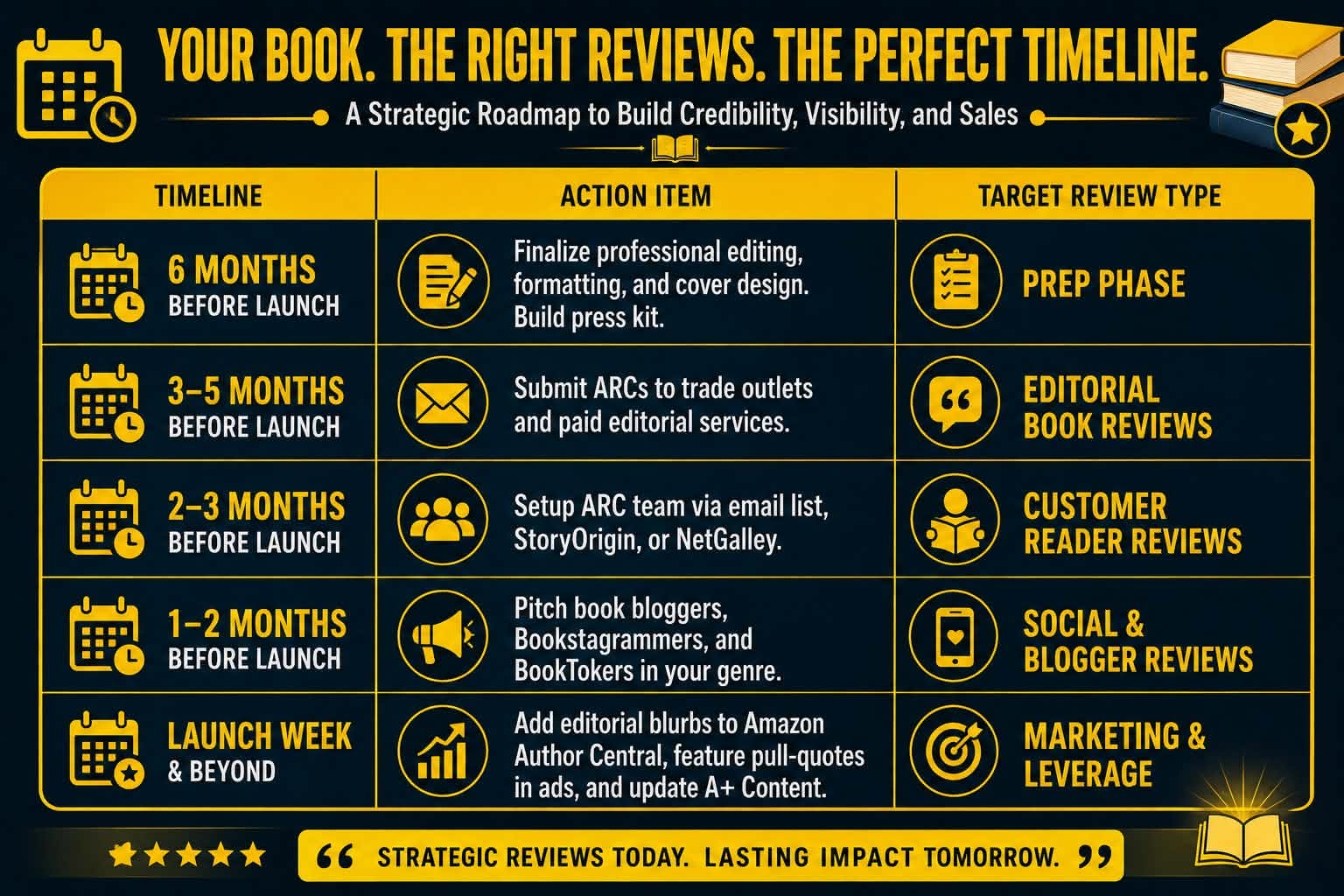
To keep your launch organized, use this quick cheat sheet to stay on track:
Final Thoughts: Persistence Wins the Race
Securing book reviews takes time, initiative, and thick skin, but it is one of the most rewarding investments you can make in your author career.
By balancing prestigious editorial book reviews, utilizing legitimate paid book reviews to fill initial credibility gaps, and cultivating an active launch team for book reviews for authors, you create a multi-layered engine that generates continuous social proof and long-term sales.
Remember: every bestselling author started with zero reviews. Take it one email, one pitch, and one reader at a time. Your stories deserve to be read—now go out there and get those reviews!