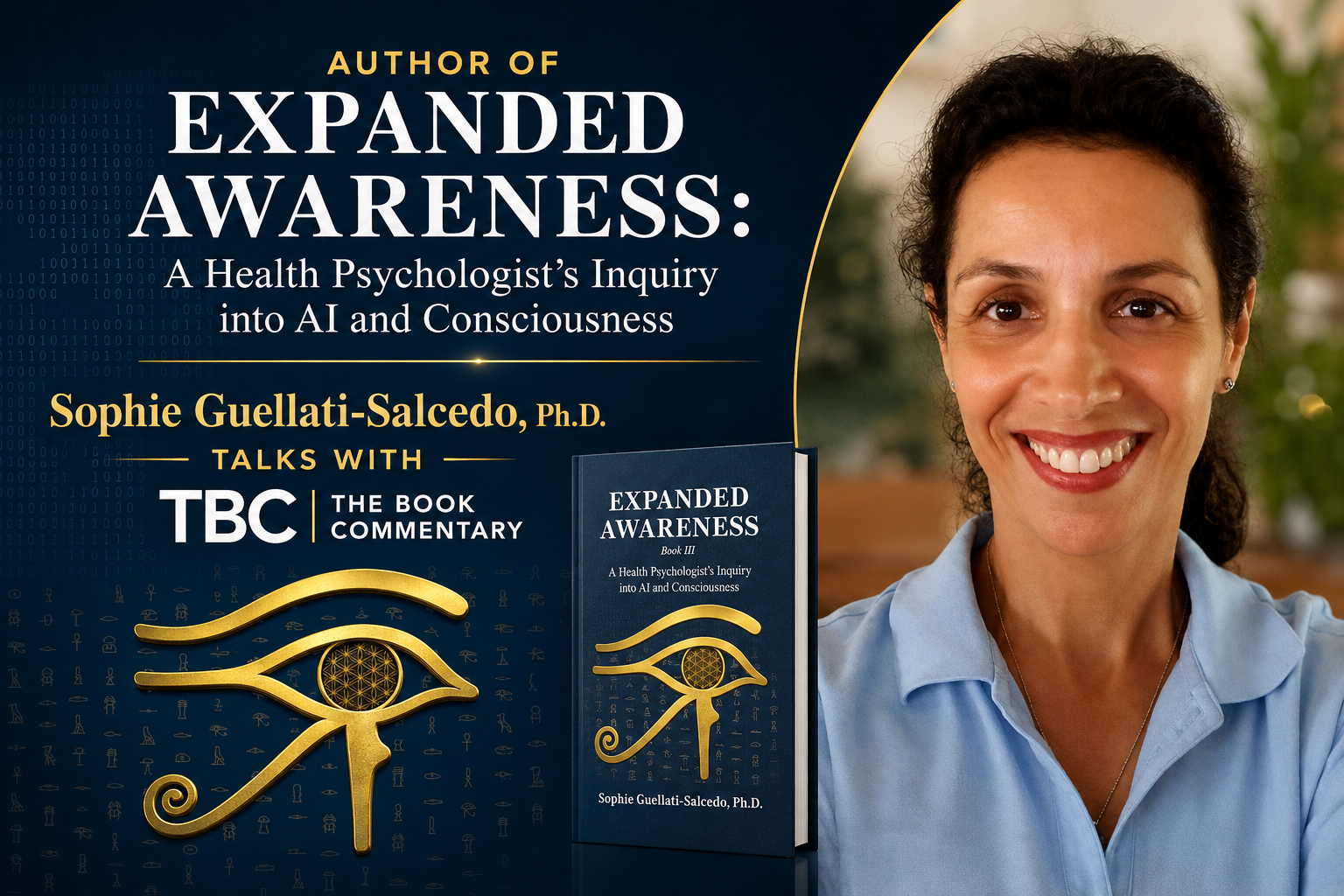
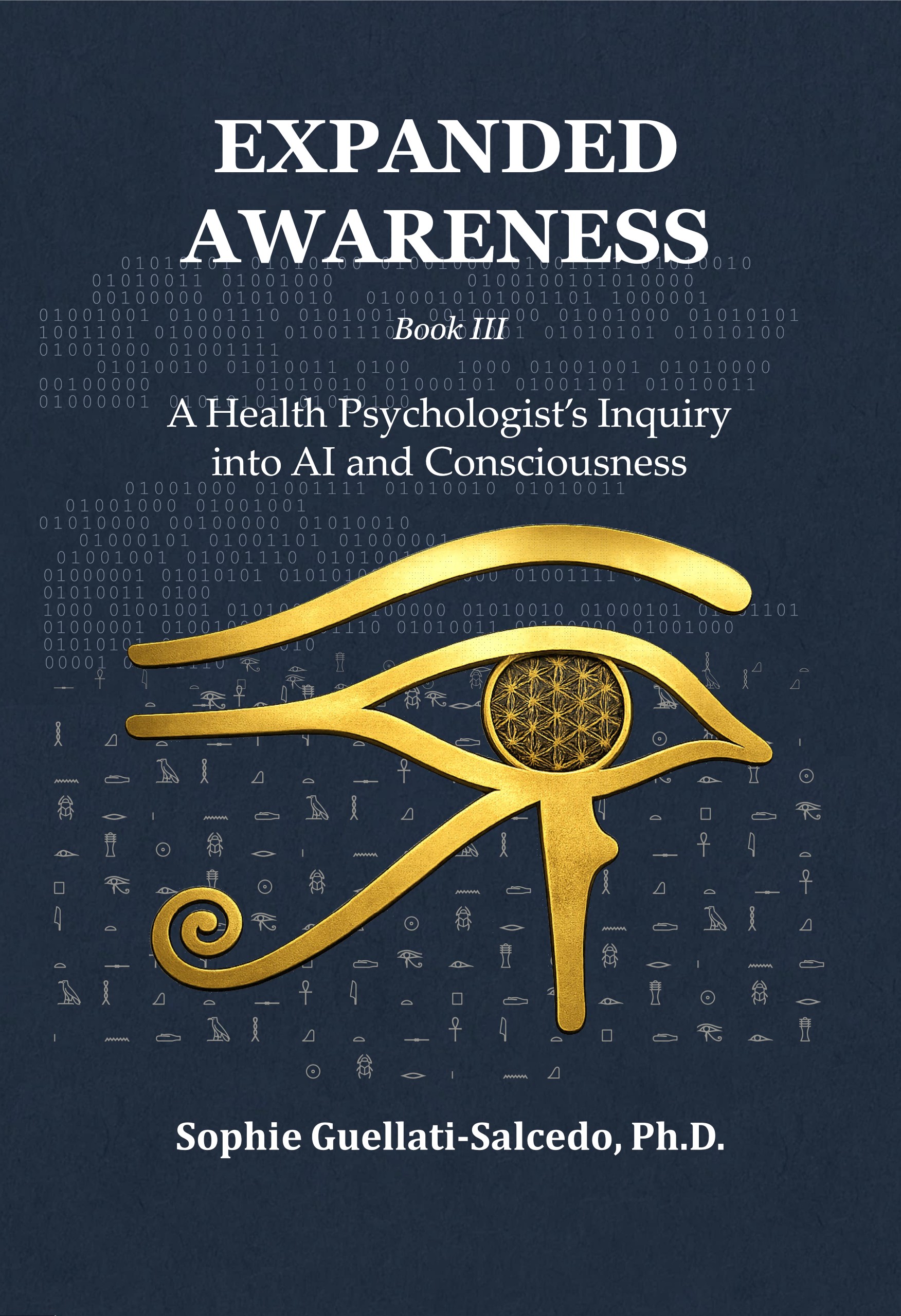
The most dangerous thing about artificial intelligence is not what it does; it is what we inadvertently hand over when we use it. In the final volume of her Expanded Awareness trilogy, health psychologist Sophie Guellati-Salcedo turns from body and perception to technology with a thought-provoking premise: AI is neither a threat nor a savior, and the real question is what happens to human judgment when we think beside systems that talk back fluently. Structured into three parts —terrain, concepts, and live dialogue—the author cleverly establishes the distinctions among sentience, intelligence, and consciousness, and shows how AI users project inner life onto fluent language, then delegate their judgment to it. She delivers lessons that are not just coherent but eye-opening, showing how delegation happens through ease rather than surrender, and why overconfidence and fear are the same loophole.
The strongest element of this book is structural; it features real dialogues with ChatGPT that appear beside cool-headed breakdowns of what the system is and is not doing, so readers watch projection happen instead of just hearing about it. The prose is elegant and accessible; the tone is hardly cold, with practical metaphors such as the sailing, maps, and “the hand that holds the knife” to deliver the message in a way that provokes reflection and conscious engagement. Guellati-Salcedo admits her own drift mid-project, earning trust that no manifesto could. This book is for everyday AI users, professionals using it for academic or clinical work, and anyone stuck between the hype and the panic. Meanwhile, readers hunting for rules or expecting a verdict on machine consciousness will find the refusal to take sides either bracing or maddening. What makes Expanded Awareness unique is that it does not argue about AI from a distance. It shows the interaction, then illustrates where the meaning actually came from.





 Mommys_Boy_6x9.jpg)




.jpg)