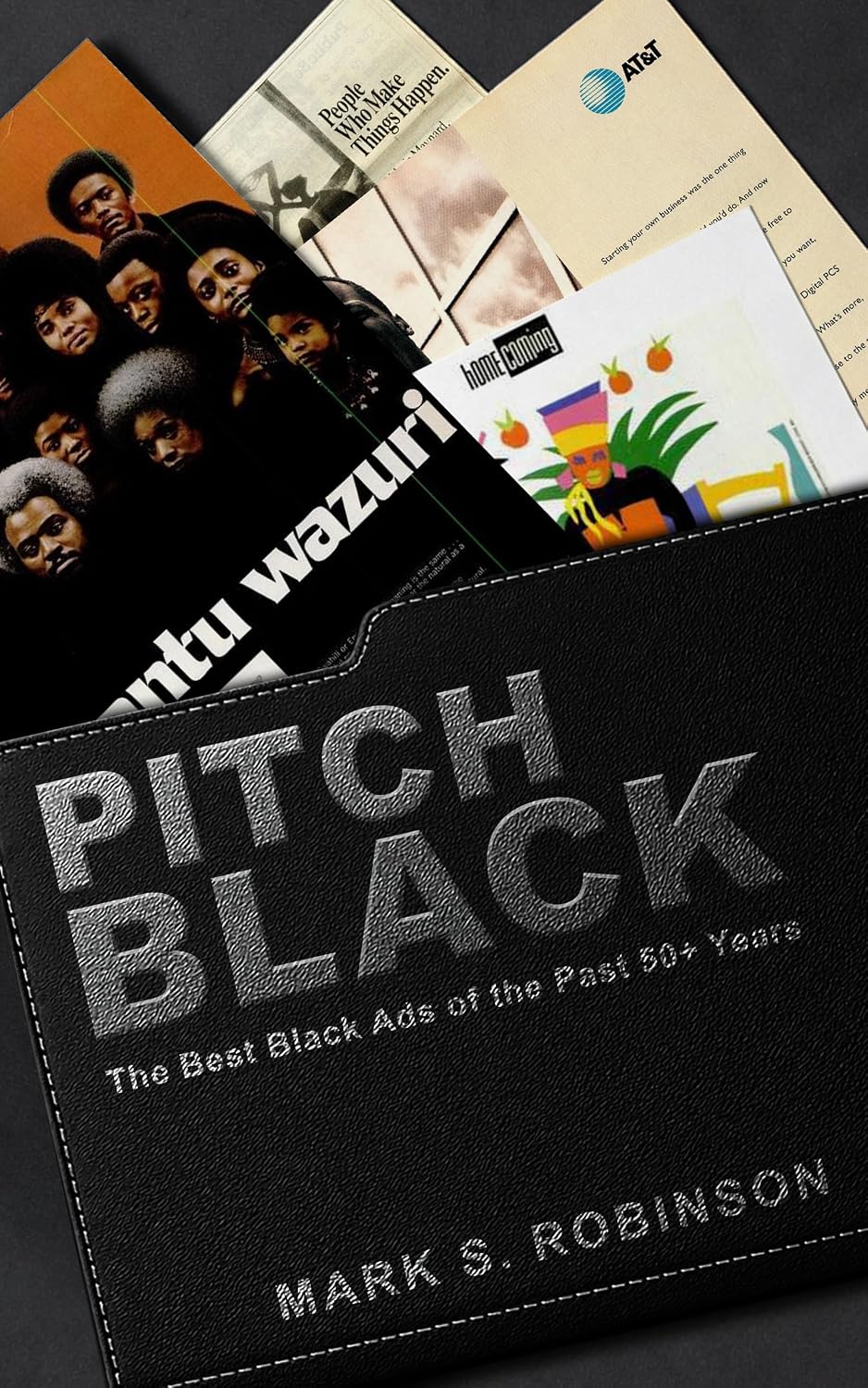
Mark S. Robinson’s Pitch Black: The Best Black Ads of the
Past 50+ Years is part curated gallery, part history lesson, a book that
traces the evolution of advertising created for, and by, Black Americans
from the civil rights era to the present day. The author brings 45 years of
industry experience to the book and examines how brands moved from ignoring
Black consumers to recognizing them as indispensable clients, and how “community
relations” advertising surged as a powerful, if sometimes cynical, subset of
multicultural marketing. The author explores the infamous missteps (Starbucks’
''#racetogether'' fiasco, the Coors boycott, and Uncle Ben’s hollow “chairman’
rebrands, as well as Disney’s abandoned DEI pledges). Meanwhile, the book
discusses the resonant work from AT&T, State Farm, Coca-Cola, and General
Motors’ haunting tribute to the slave ship Henrietta Marie. An
eye-opening afterword dismantles the myth that white actors have “disappeared”
from advertising with hard data.
Pitch Black is an engaging read that moves decade by
decade through bite-sized case studies that feel like miniature corporate
dramas—PR fires, boycotts, and redemption arcs. The book is a study of brand
icons, coaches like Eddie Robinson, and tone-deaf executives. The storytelling
shines brightest when the author lets the ads speak, such as the Henrietta
Marie copy narrated in the ship’s own voice. Mark S. Robinson’s book
examines commerce as a civil rights battleground, authenticity versus tokenism,
and the shifting balance of consumer power, giving the book provocative ideas
for reflection. The voice is its greatest asset—wry, candid, insider-knowledgeable,
and unafraid to call hypocrisy by name. There’s much to like in this book: the
behind-the-scenes context, the rare archival ads, and the persuasive argument
that Black advertising has always carried an agenda of social advancement. This
book is essential reading for marketers, historians, and anyone curious about
how America sells itself.





 Mommys_Boy_6x9.jpg)





.jpg)



























.jpg)






.jpg)










.jpg)









.jpg)
.jpg)











.jpg)


 (2).jpg)


.jpg)










.jpg)






.jpg)




.jpg)






















.jpeg)










.png)






 (1).jpg)


.jpg)







.jpg)