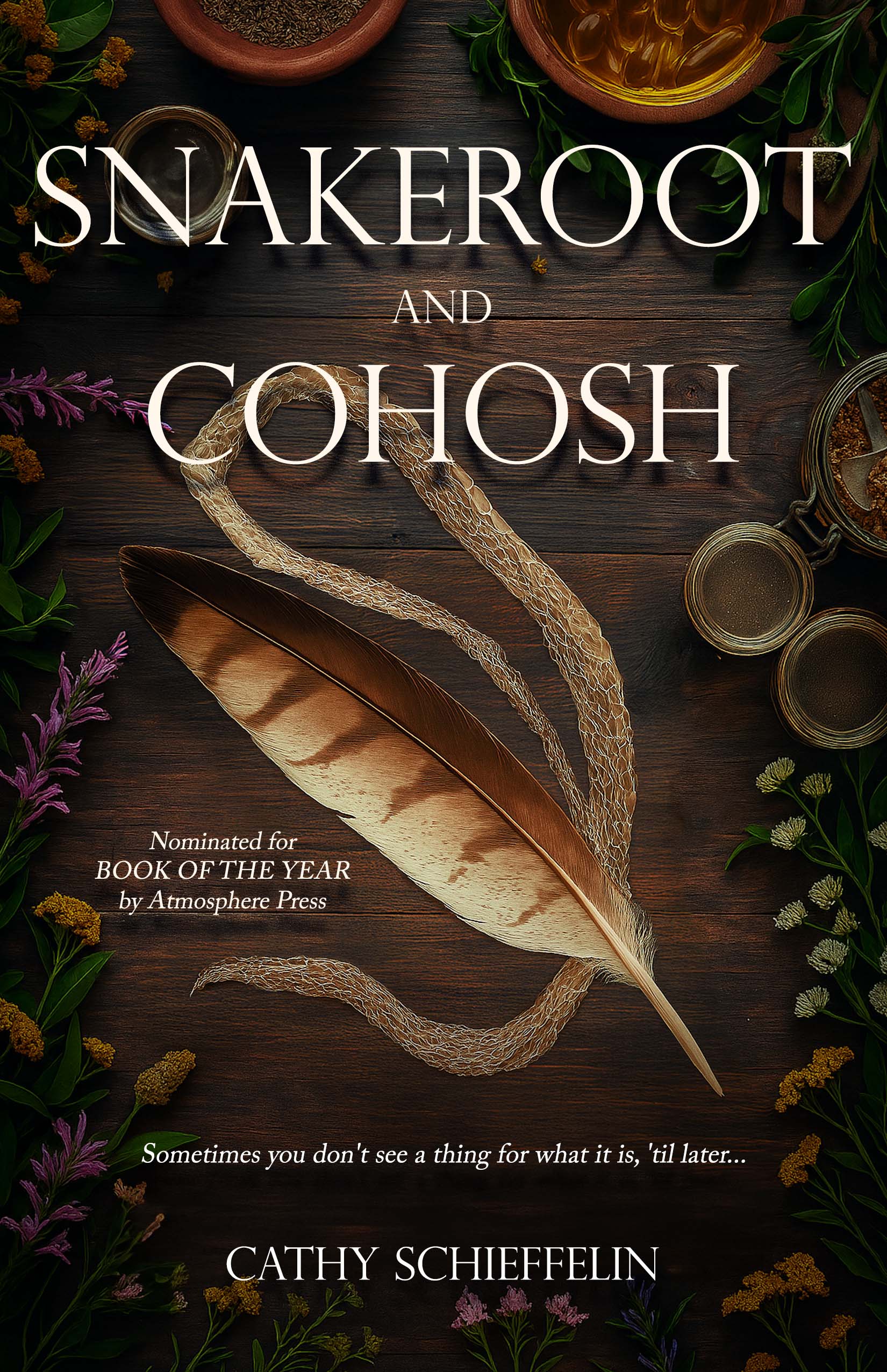
Set in 1950s Appalachian Kentucky, Snakeroot and Cohosh
by Cathy Schieffelin follows Eva Morgan, who has suffered abuse at the
hands of her husband, Luther. She is a gifted herbalist who relies on her
healing skills, and she disguises herself as a man named “Enos” in her quest
for a new start. She lands a job, leading botanical tours in Helton, armed with
knowledge passed down from her late mother. But Luther hasn’t given up on her. He
tracks her down, but she asserts her independence. While he promises that he
has changed, it is hard for Eva to believe him. However, reconnecting with
Luther’s family helps to bring up a past that is as painful as it is a door for
healing. Luther fights to regain Eva’s truth and redemption through honesty,
music, and woodworking. Can Eva learn to trust again, and is Luther’s proclaimed
transformation real?
Cathy Schieffelin writes about generational trauma with
unusual intelligence, creating characters that are not only genuinely flawed
but also utterly believable. Eva is a character who reveals a lot about
survival and taking responsibility for one’s destiny. She meets every criterion
for a compelling heroine —emotional depth, realistic characterization, and flaws
in character. Her psyche is vividly drawn, and from the moment she leaves
Luther, I was keen to watch the internal conflict unfold within her. Luther’s
journey grounds the story psychologically. He has suffered from abuse as well,
and his regrets underpin his desire for redemption, which is hard-won.
Snakeroot and Cohosh present a finely drawn setting against
which domestic abuse, gender constraints in rural Appalachia, and the
possibility of change without absolving perpetrators take place. The symbolism
in this work captured my interest, especially the medicinal plants, such as snakeroot
and cohosh, which represent healing traditions passed between women. The dogbane
is initially considered for poisoning Luther, but becomes a symbol of Eva's
choice of life over vengeance. The setting breathes with authenticity, from
coal-dusted mining towns to misty hollers, clapboard churches, and general
stores that give a vividly rendered Kentucky landscape. Schieffelin honors
Appalachian culture without exoticizing it, integrating bluegrass music,
quilting patterns, and plant wisdom into the identities of the characters. This
is a beautifully written story about how love, paired with accountability, can
heal even the most broken relationships.





 Mommys_Boy_6x9.jpg)




.jpg)






















.jpg)


 JPEG.jpg)






.jpg)










































.jpg)