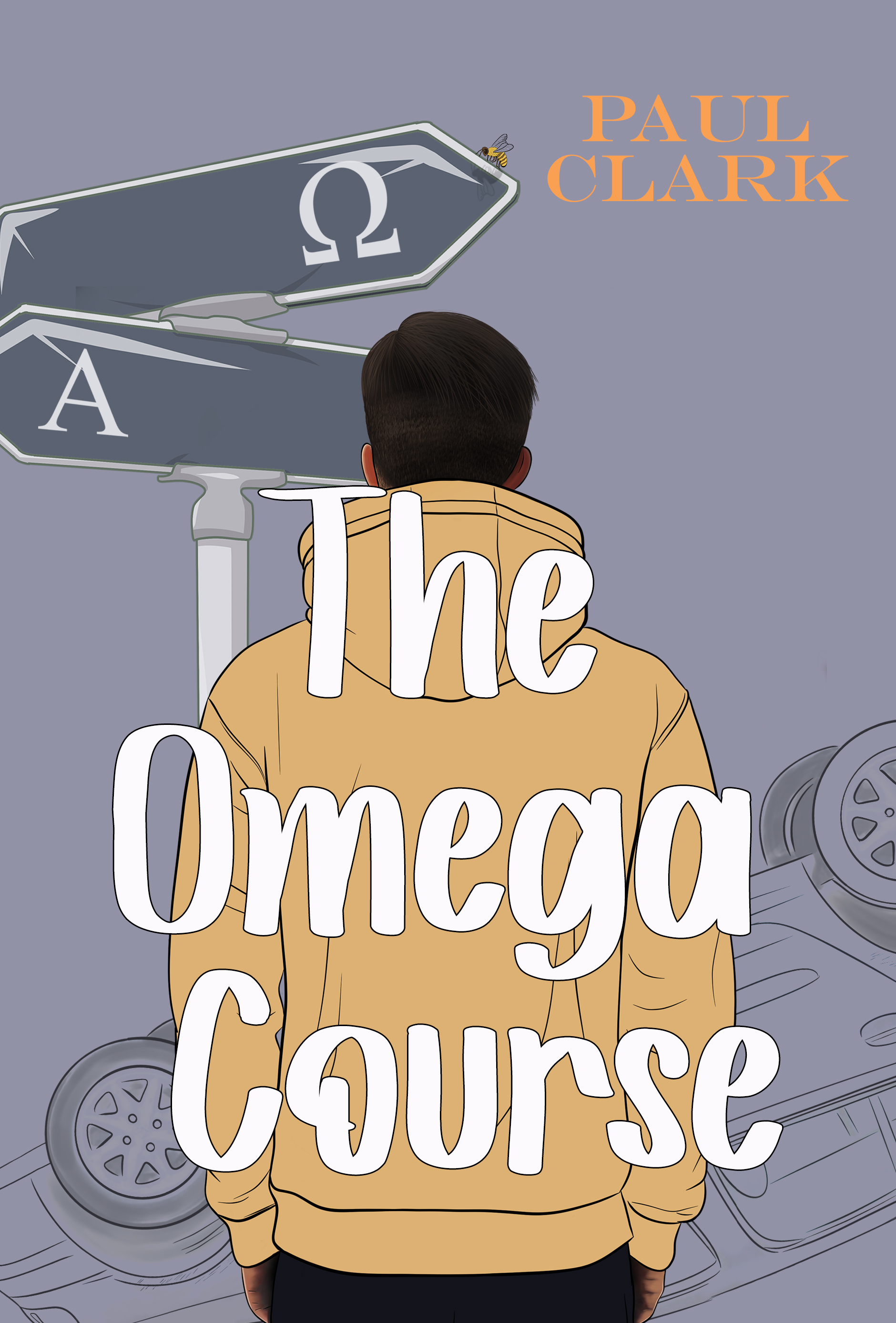
Seventeen-year-old Ross Collins accidentally kills another
driver shortly after passing his driving test in Paul Clark’s The Omega
Course, and his life changes in unexpected ways. He is unable to live
with the guilt of killing a mother and leaving two children behind. Ross
withdraws from his friends, consumed by guilt and self-loathing. When he
enrolls in the Alpha Course, he hopes to reclaim his life and find Christian
redemption, but he instead meets Bee Ormerod, a theology student whose faith is
crumbling. She offers him an alternative “Omega Course” that deconstructs the
biblical foundations of Christianity through historical scholarship. Torn
between Alpha’s promise of forgiveness and Omega’s demythologized truth, Ross
must ultimately confront what genuine redemption looks like. The big question
is: can he find forgiveness and healing as his trial approaches?
Paul Clark’s novel is remarkable for its even-handed
treatment of religious faith and doubt. The characters are surprisingly flawed
and human, like the regular guy you meet daily in the neighborhood. Each of
these characters carries a burden that instantly inspires sympathy in the
reader: Ross’s self-lacerating guilt, Sofie's quiet warmth that masks her
trauma, and Bee's intellectual honesty as she dismantles her lifelong beliefs.
The philosophical tension between mythos and logos—between religious meaning
and empirical truth—drives the narrative without didacticism. Clark draws on
extensive biblical scholarship, presenting complex theological debates through
accessible, intriguing dialogue. The novel's sensitivity to religious
experience is particularly notable; it neither ridicules believers nor endorses
fundamentalism, instead exploring how faith functions as both psychological
salve and potential obstacle to authentic growth.
The subplot involving the Akehurst family's dysfunction
fuels the suspense and enriches the story’s tension, with Sid's toxic
masculinity and Nigel's well-meaning pastoral care. The subplot illuminates how
religious communities can simultaneously heal and harm. The novel's ultimate
wisdom lies in its recognition that redemption is not a destination but a
process requiring professional help, human connection, and self-compassion
rather than divine intervention. This story delivers everything I look for in a
book: superior storytelling, crisp writing, and pulsating drama. It excites the
mind and entertains the heart. This is a philosophical book that challenges some of our long-held beliefs, and I was left with the
conviction that religious narratives can retain transformative power even when
recognized as historically contingent rather than literally true.



 Mommys_Boy_6x9.jpg)



.jpg)
























.jpg)

 JPEG.jpg)









.jpg)












































.jpg)