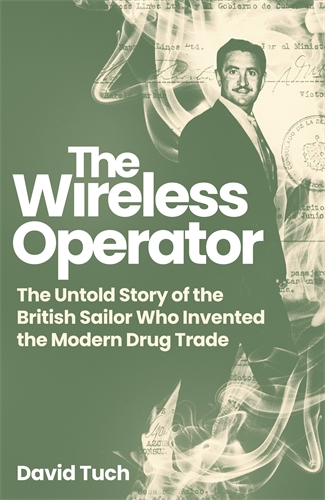
David Tuch's The Wireless Operator: The Untold Story of
the British Sailor Who Invented the Modern Drug Trade chronicles the
extraordinary life of Harold Derber, born Hyman Tuchverderber in 1926,
Manchester. From his childhood evacuation during the Blitz to his training as a
wireless operator in the British Merchant Navy, Derber’s journey spans
continents and decades. After fighting in Israel's War of Independence and
various smuggling ventures, he arrives in 1960s Miami, where he launches the Freedom
Ferry to transport Cuban refugees, a humanitarian mission that pits him against
the U.S. State Department and leads to multiple deportations. Undeterred,
Derber exploits a legal loophole in the 1970 Controlled Substances Act to
pioneer the drug “mothership” concept, revolutionizing narcotics trafficking by
positioning massive cargo ships beyond U.S. territorial waters. Building a
fleet that transports hundreds of tons of marijuana annually, he partners with
Colombian suppliers, launders millions through Wall Street, and builds
dangerous alliances with intelligence agencies and organized crime, before
meeting his end in a 1976 assassination.
David Tuch’s biography is a well-researched book that offers
a complex, sophisticated portrait of Derber, a man driven by both humanitarian
impulse and criminal ambition. His relationship with Sari Cohen, a glamorous
entertainer secretly working as a CIA contractor, is one of the intriguing
layers of the story. Key moments like the dramatic Nana ferry voyage, Derber's
courtroom battles, and the Lillian B drug bust showcase Tuch's gripping
storytelling. The book questions whether it is right to break unjust laws, examines
Cold War geopolitics, and explores how one man’s ingenuity transformed global
drug trafficking. Particularly compelling is Derber’s dual identity—as both a
refugee rescuer branded a national security threat and the architect of an
industrial-scale smuggling operation. Tuch's meticulous research, drawing from
declassified documents and personal interviews, reveals a shadowy world where
government agencies, intelligence services, and criminal enterprises intersect.
This is not merely a crime biography but a meditation on freedom, bureaucracy,
and the price of defiance. For me, this book was thought and particularly
revealing.



 Mommys_Boy_6x9.jpg)




.jpg)































.jpg)




.jpg)