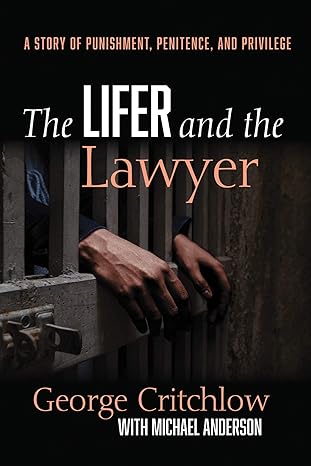
Michael Anderson is a broken man; a man broken by his
felonies and a justice system that is equally flawed, but will he accept staying
broken or undertake the journey to healing and redemption? This is the question
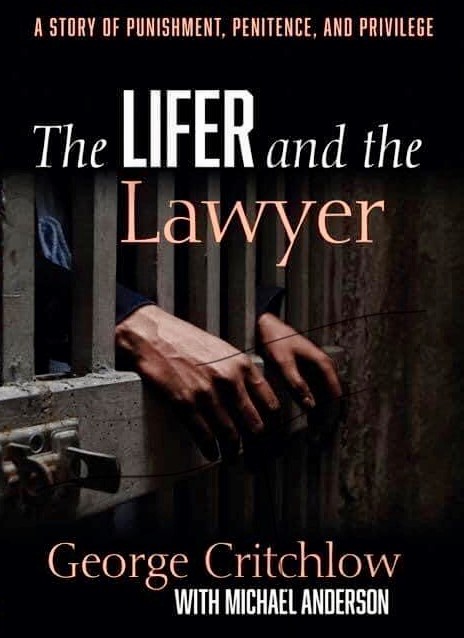
cleverly answered in The Lifer and the Lawyer by George Critchlow and
Michael Anderson, which chronicles Anderson’s harrowing childhood on Chicago’s
South Side, his violent crimes, and his remarkable spiritual transformation
over nearly four decades in Washington state prisons. The book explores the
evolving friendship between Anderson and George Critchlow, a young, white
lawyer assigned to defend him in 1979. Over five decades, their lives
intertwine against the backdrop of race, trauma, faith, and justice. Critchlow
reflects on how their relationship challenges conventional notions of
punishment and redemption, while Anderson’s journey underlines the power of
faith and self-awareness to heal wounds thought to fester forever.
The Lifer and the Lawyer was a great read, and I was
fascinated by the author’s profound look at America’s criminal justice system,
race, and morality. The story’s central message is that even those deemed
irreparable can find purpose, love, and hope. The story is deeply moving,
personal, and filled with intimate, heart-wrenching moments. I was immediately
drawn in by the pathos that highlights the premise, the description of a
chained man before the court, bent and looking sad. I knew I wanted to know his
story, and it turned out to be an engaging, inspiring tale. Through the
lawyer’s reflective eyes, I witnessed Michael’s journey from a violent,
traumatized child to a devout, empathetic man seeking forgiveness and purpose. George
Critchlow writes in beautiful prose and has an exceptional gift for character,
offering a full portrait of a man whose childhood was marked by neglect, abuse,
and racial discrimination. The finely drawn setting depicts the confines of
Washington State prisons to the quiet, unassuming towns of Pasco and Kennewick,
Washington. This emotionally rich, psychologically grounded narrative is a page-turner that will leave you asking many questions about the justice system.





 Mommys_Boy_6x9.jpg)




.jpg)






























.jpg)




.jpg)